
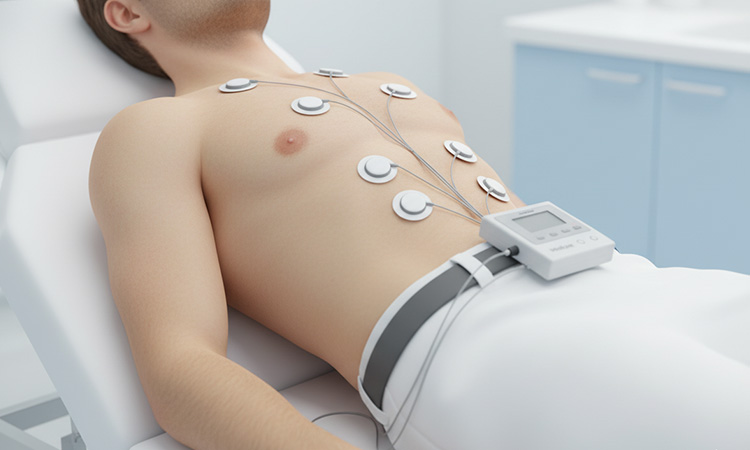
24 Hour Holter Monitoring
24-hour Holter Monitoring
is a continuous electrocardiographic (ECG) recording performed over 24 hours (sometimes 48–72 hours) using a small portable device. It helps detect heart rhythm abnormalities that may not appear during a short clinic ECG.
Below is a clear, clinical-grade explanation.
1. What is 24-Hour Holter Monitoring?
A Holter monitor is a lightweight, wearable device that continuously records the heart’s electrical activity through electrodes placed on the chest.
The patient goes about normal daily activities while the device captures every heartbeat.
It provides:
- Continuous rhythm monitoring
- Beat-to-beat analysis
- Correlation of symptoms with ECG changes
2. Indications (When Holter is Used)
A. Symptoms Suggestive of Arrhythmia
- Palpitations
- Dizziness or fainting (syncope/presyncope)
- Irregular or skipped beats
- Unexplained fatigue or breathlessness
B. Detection of Arrhythmias
- Atrial fibrillation (AF)
- Supraventricular tachycardia (SVT)
- Ventricular ectopy or ventricular tachycardia (VT)
- Bradycardia or intermittent AV block
- Pause episodes
C. Monitoring Treatment
- Efficacy of antiarrhythmic medicines
- Pacemaker functioning
- Post-ablation rhythm assessment
D. Risk Stratification
- Patients with structural heart disease
- Assessing QT interval abnormalities
- Evaluation after myocardial infarction
3. How the Holter Test is Performed
i. Electrode placement
- 3–12 stickers placed on the chest
- Connected to a small recording device
ii. Recording period (24 hours or longer)
- Patient continues normal routine
- Must avoid getting the device wet (no bathing unless waterproof)
iii. Symptom diary
- Patient notes time and type of symptoms (e.g., palpitations, dizziness)
iv. Device return and analysis
- Data transferred to specialized software
- Cardiologist reviews rhythm abnormalities and correlates with symptoms
4. What Holter Monitoring Detects
- Premature atrial/ventricular beats (PACs, PVCs)
- Runs of tachycardia (SVT, VT)
- Paroxysmal atrial fibrillation (PAF)
- Pause episodes (>2–3 seconds)
- Heart block (1st, 2nd, 3rd degree)
- ST-segment changes (sometimes used for ischemia detection)
- Day–night rhythm variation
5. Advantages
- Non-invasive
- Continuous monitoring captures intermittent arrhythmias
- Correlates symptoms with ECG
- Useful when routine ECG is normal
- Detects silent arrhythmias (asymptomatic AF)
6. Limitations
- If arrhythmias are very infrequent, a 24-hour period may not capture them
- Skin irritation from electrodes
- No bathing/swimming unless device is waterproof
- Motion artefacts in active patients
For rare symptoms, extended monitors (48-hr Holter, 7–14 day event monitor, patch monitor, or loop recorder) may be recommended.
7. Results You May See in a Holter Report
- Total beats recorded
- Minimum, maximum, and average heart rate
- % burden of PVCs or PACs
- Number of runs of SVT or VT
- Longest pause
- Presence of AF episodes (duration and frequency)
- Correlation with diary symptoms