
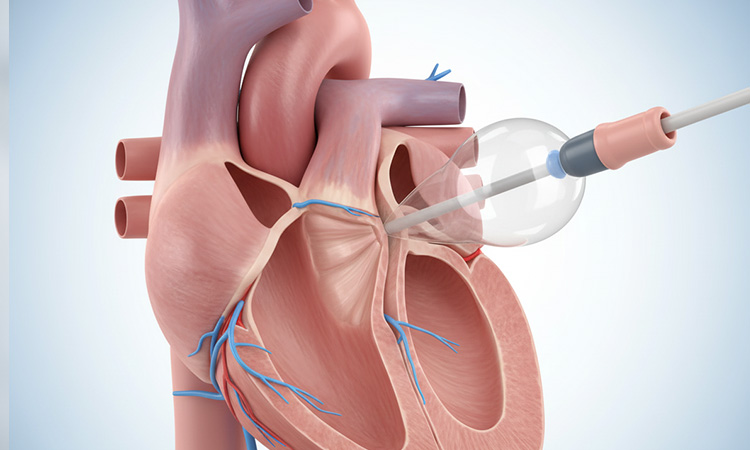
Balloon Valvuloplasty
A minimally invasive cardiac procedure used to widen a narrowed heart valve (valvular stenosis) by inflating a balloon inside the valve.
It is most commonly used for:
- Mitral stenosis
- Pulmonary valve stenosis
- Aortic stenosis (in selected young patients or as a bridge to TAVI/surgery)
Why It’s Done
Balloon valvuloplasty is performed when a valve becomes stiff or narrowed due to:
- Rheumatic heart disease (especially mitral stenosis)
- Congenital valve defects (especially pulmonary stenosis)
- Degenerative calcification (less effective in calcified aortic valves)
The goal is to improve blood flow and relieve symptoms such as:
- Shortness of breath
- Chest discomfort
- Exercise intolerance
- Fatigue
- Syncope (depending on valve involved)
How the Procedure Works
- A catheter is inserted through a blood vessel (usually femoral vein or artery).
- It is guided through the circulatory system to the stenotic valve.
- A specialized balloon at the catheter tip is positioned across the valve.
- The balloon is inflated to stretch and separate the fused valve leaflets.
- The balloon is deflated and removed.
No surgical incision in the chest is required.
Types of Balloon Valvuloplasty
1. Percutaneous Mitral Balloon Valvotomy (PMBV)
- Most effective in rheumatic mitral stenosis with pliable, non-calcified leaflets.
- Uses an Inoue balloon or double-balloon technique.
2. Balloon Pulmonary Valvuloplasty
- First-line treatment for congenital pulmonary valve stenosis.
- Excellent long-term outcomes.
3. Balloon Aortic Valvuloplasty (BAV)
- Limited durability; valve frequently re-narrows.
Used as:
- A temporary bridge to TAVR/surgery
- For high-risk or unstable patients
- In children with congenital AS
Benefits
- Minimally invasive
- Faster recovery compared with open-heart surgery
- Immediate symptom relief
- Often performed under sedation rather than general anesthesia
Risks
- Valve regurgitation (leaking)
- Embolic stroke (especially mitral valvotomy)
- Arrhythmias
- Bleeding or vascular complications
- Restenosis (valve narrowing returns over time)
Ideal Candidates
Best outcomes occur when:
- Valve leaflets are pliable and not heavily calcified
- Minimal or no valve regurgitation before procedure
- No left atrial thrombus (for mitral stenosis)