
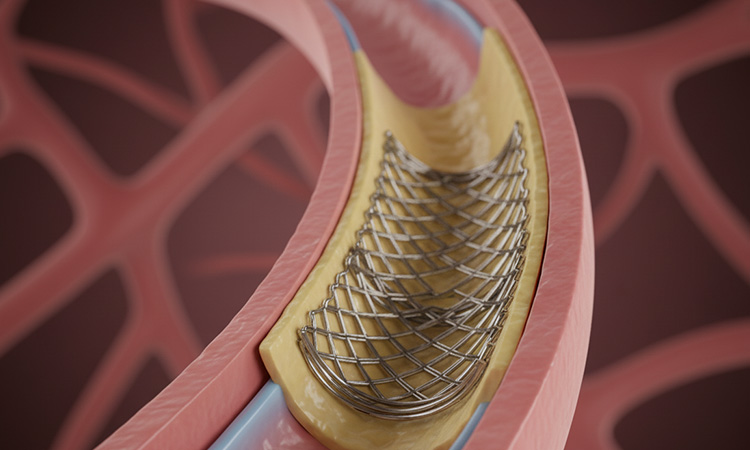
Coronary Angioplasty-PTCA
Coronary Angioplasty, also called Percutaneous Coronary Intervention (PCI) or PTCA, is a minimally invasive procedure used to open blocked or narrowed coronary arteries to restore normal blood flow to the heart.
It is often performed immediately after coronary angiography if a significant blockage is found.
How Coronary Angioplasty Is Done
1. A thin tube (catheter) is inserted into an artery
– usually in the wrist (radial artery) or groin (femoral artery).
2. A second catheter with a small balloon at the tip is guided to the blocked artery.
3. The balloon is inflated, which:
- Compresses the cholesterol plaque
- Widens the artery
4. Usually, a stent (a small metal mesh tube) is placed to keep the artery open.
5. The balloon is then deflated and removed, leaving the stent in place.
Types of Stents
1. Drug-Eluting Stent (DES)
- Coated with medication
- Prevents re-blockage
- Most commonly used today
2. Bare Metal Stent (BMS)
- No medication coating
- Rarely used now
Who Needs Coronary Angioplasty?
- Significant coronary artery blockages (usually >70%)
- Severe chest pain (angina) not relieved by medicines
- Heart attack (emergency angioplasty is lifesaving)
- Positive stress tests showing poor blood flow
- Blockages found during coronary angiography
Benefits
- Immediate relief from chest pain
- Restores blood flow
- Lowers risk of heart attack
- Short recovery time (1–2 days for routine cases)
Risks (Generally Low)
- Bleeding at the catheter site
- Artery re-narrowing (rare with modern stents)
- Clot formation inside the stent
- Heart rhythm problems
- Rare: heart attack or stroke
After Angioplasty
- You may need to stay in the hospital for 1–2 days.
- Medications are essential:
- Antiplatelets (Aspirin + Clopidogrel/Ticagrelor) to prevent stent clots
- Cholesterol-lowering drugs
- BP and heart-protection medicines
- Lifestyle changes are crucial:
- Quit smoking
- Heart-healthy diet
- Regular exercise
- Weight and diabetes control