
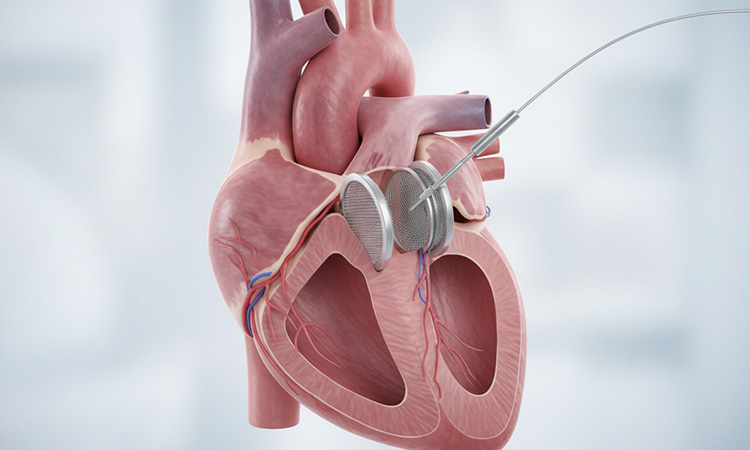
Device Closure of Congenital Heart Disease
Device closure for congenital heart diseases
refers to minimally invasive (catheter-based) procedures used to close abnormal openings or blood-flow pathways in the heart without the need for open-heart surgery. These procedures are typically performed by pediatric or adult congenital interventional cardiologists.
Below is a clear, safe, and structured overview:
1. What is Device Closure?
A catheter (a thin flexible tube) is inserted through a vein—usually in the groin—and guided to the heart under X-ray and echocardiography. A special closure device (such as an occluder or plug) is deployed to seal the defect.
Advantages
- No open-heart surgery or sternotomy
- Shorter hospital stay (often 24–48 hours)
- Faster recovery
- Lower risk of infection
- Less pain and scarring
2. Conditions Commonly Treated With Device Closure
i. Atrial Septal Defect (ASD) – secundum type
- Most common condition treated with device closure.
- A self-expanding metal mesh occluder is used.
- Success rate: >95% in suitable anatomy.
ii. Patent Ductus Arteriosus (PDA)
- Closed using coils or PDA occluder devices.
- Typically outpatient or overnight stay.
iii. Ventricular Septal Defect (VSD)
- Device closure is possible for:
- Muscular VSDs
- Selected perimembranous VSDs (depending on anatomy and risk of heart block)
iv. Patent Foramen Ovale (PFO)
- Closed in patients with certain conditions (e.g., recurrent cryptogenic stroke).
v. Coronary or systemic–pulmonary fistulas
- Closed using coils or vascular plugs.
vi. Paravalvular Leaks (after valve replacement)
- Treated with special occluder plugs.
3. How the Procedure Works
i. Patient receives sedation or general anesthesia.
ii. Catheter introduced through the femoral vein (rarely artery).
iii. Defect is visualized with TEE or ICE ultrasound.
iv. Device is positioned across the defect.
v. Once proper placement is confirmed, it is released.
vi. The device becomes covered with tissue over several months.
4. Risks and Complications (Generally Low)
- Bleeding or bruising at catheter site
- Arrhythmias (usually temporary)
- Device malposition or embolization (rare)
- Blood clots
- Allergic reaction to contrast
- Very rare: erosion or heart block (depending on device and anatomy)
5. Post-Procedure Care
- Observation for 12–24 hours
- Blood thinners (e.g., aspirin) for 3–6 months
- Avoid heavy exercise for 1–2 weeks
- Follow-up echo to ensure proper device position and healing
6. When Device Closure is Not Suitable
- Defect edges (rims) too small for safe device placement
- Associated heart defects requiring surgery
- Very large VSDs or ASD primum/sinus venosus types
- Active infection or uncontrolled arrhythmias