
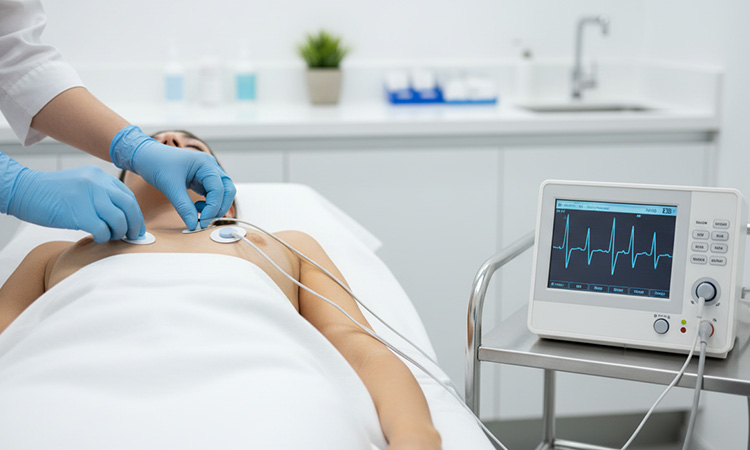
Electrocardiography (ECG)
Electrocardiography (ECG or EKG) is a simple, non-invasive test that records the electrical activity of the heart. It helps doctors understand how your heart is working by displaying its electrical signals as waveforms on a graph.
What an ECG Shows
- Heart rate (how fast the heart beats)
- Heart rhythm (regular or irregular)
- Electrical conduction pathways
Evidence of:
- Heart attacks (past or current)
- Angina or reduced blood flow
- Heart enlargement (hypertrophy)
- Electrolyte imbalances
- Abnormal heart rhythms (arrhythmias)
How the Test Is Done
- Electrodes are placed on the chest, arms, and legs.
- These detect electrical impulses produced each time the heart beats.
- The ECG machine records these signals as a series of waves:
- P wave – atrial activity
- QRS complex – ventricular activity
- T wave – ventricular recovery
Types of ECG
- Resting ECG – Done while lying still.
- Exercise ECG (Stress ECG) – Monitors ECG while performing exercise (similar to TMT).
- Holter monitoring – 24–48-hour continuous ECG recording.
- Event recorder – Used for occasional symptoms.
Is ECG Safe?
Yes, it’s painless, quick (5–10 minutes), and involves no radiation.