
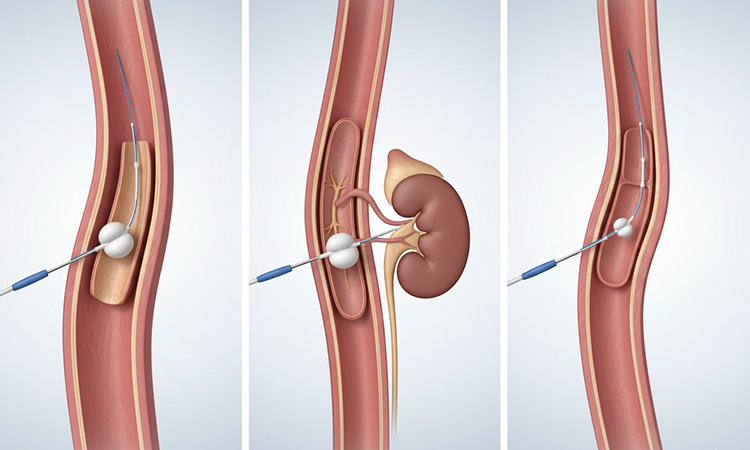
Peripheral, Renal and Cerebral Angiography and Angioplasty
A diagnostic imaging procedure used to visualize the arteries outside the heart—most commonly in the legs, arms, abdomen, or neck, to detect blockages, narrowing (stenosis), or abnormalities.
How it’s done:
- A catheter is inserted (usually through the femoral or radial artery).
- Contrast dye is injected into the peripheral arteries.
- X-ray images (fluoroscopy) are taken to map blood flow and locate blockages.
Indications:
- Peripheral artery disease (PAD)
- Non-healing wounds or gangrene
- Claudication (leg pain with walking)
- Acute limb ischemia
- Pre-surgical planning
What it shows:
- Location and severity of arterial narrowing
- Presence of plaque, clots, aneurysms, or arterial occlusions
Risks:
- Contrast allergy
- Bleeding/hematoma at puncture site
- Kidney damage (contrast nephropathy)
- Rare vessel injury
Peripheral Angioplasty (Percutaneous Transluminal Angioplasty – PTA)
Definition:
A therapeutic procedure performed to open narrowed or blocked peripheral arteries using a balloon, with or without a stent.
How it’s done:
1. Catheter is guided to the blockage.
2. A balloon is inflated to widen the artery.
3. A stent may be placed to keep the artery open (drug-eluting or bare-metal).
4. Blood flow is restored.
Indications:
- Significant PAD with lifestyle-limiting symptoms
- Critical limb ischemia (rest pain, ulcers)
- Acute arterial occlusion
- Stenosis in renal, mesenteric, or carotid arteries (by subspecialty decision)
Advantages:
- Minimally invasive
- Short recovery time
- Effective in reopening focal arterial blockages
Risks:
- Re-narrowing (restenosis)
- Dissection or rupture of the artery
- Embolization (plaque/debris traveling downstream)
- Hematoma or bleeding
- Contrast/kidney-related issues