
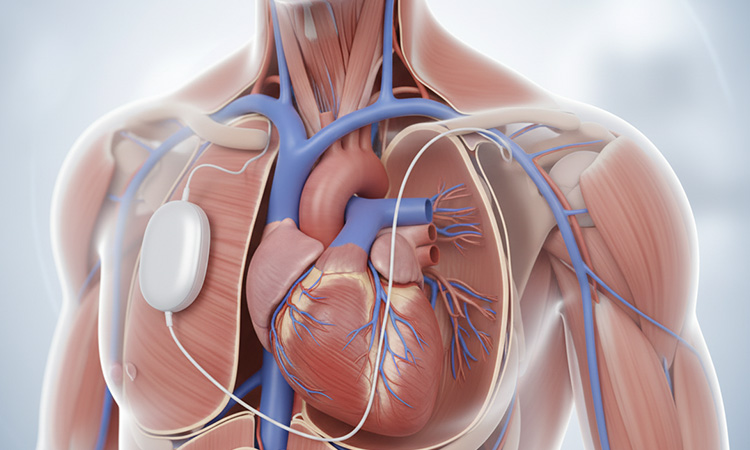
Permanent Pacemaker Implantation (PPI)
Permanent Pacemaker Implantation (PPI) is a medical procedure in which a small electronic device called a pacemaker is placed inside the body to help control abnormal heart rhythms. It is used when the heart beats too slowly, pauses, or has electrical conduction problems.
What Is a Permanent Pacemaker?
A pacemaker is a small, battery-powered device that sends mild electrical impulses to the heart to maintain a normal and stable heartbeat.
It consists of:
1. Pulse generator – contains the battery and electronics
2. Leads (wires) – deliver electrical impulses to the heart
3. Electrodes – sense heart activity and provide pacing when needed
Why Pacemaker Implantation Is Done ?
A permanent pacemaker is recommended for:
Bradycardia (slow heart rate)
- Sick sinus syndrome
- Sinus node dysfunction
Heart block
- Complete heart block (3rd degree)
- Mobitz type II block
Electrical conduction disorders
- Bundle branch block with symptoms
- After some heart surgeries or heart attacks
Other conditions
- Fainting due to slow heart rhythms
- Some cases of heart failure (special pacemakers like CRT)
How the Procedure Is Done
1. The patient receives local anaesthesia + mild sedation.
2. A small incision is made below the collarbone.
3. Leads are guided through a vein into the heart under X-ray guidance.
4. Leads are attached to the heart muscle.
5. The pacemaker generator is placed under the skin (chest area).
6. The system is tested, and the incision is closed.
Typical duration: 45 minutes to 1.5 hours.
Hospital stay: Usually 1 day.
Types of Permanent Pacemakers
1. Single-chamber pacemaker – one lead (right atrium or right ventricle)
2. Dual-chamber pacemaker – two leads (RA + RV)
3. Biventricular pacemaker (CRT) – used in heart failure (LV lead + RA + RV)
4. Leadless pacemaker: a mini device placed directly inside the heart (no wires)
Benefits
- Prevents dangerously slow heart rates
- Reduces fainting and dizziness
- Improves exercise capacity
- Improves quality of life
- Can reduce the risk of sudden cardiac events
Risks (Low but Possible)
- Infection at the implant site
- Bleeding or bruising
- Lead displacement
- Pneumothorax (air in chest cavity, rare)
- Allergy to medication or dye
Doctors take precautions to minimize these risks.
Aftercare & Precautions
- Avoid lifting the arm on the pacemaker side for 2–4 weeks
- No heavy lifting for 1 month
- Regular follow-up to check pacemaker function
- Avoid strong magnetic fields (MRI may need special settings)
- Keep mobile phones at least 6 inches away from the device